
.
Sunday, 11 October, 2026
There is peace even in the storm...
Sunday, 11 October, 2026.
“Rest and be thankful.”
―
Friday, 9 October, 2026
Whenever you are confronted with an opponent. Conquer him with love.
Friday, 9 October, 2026.

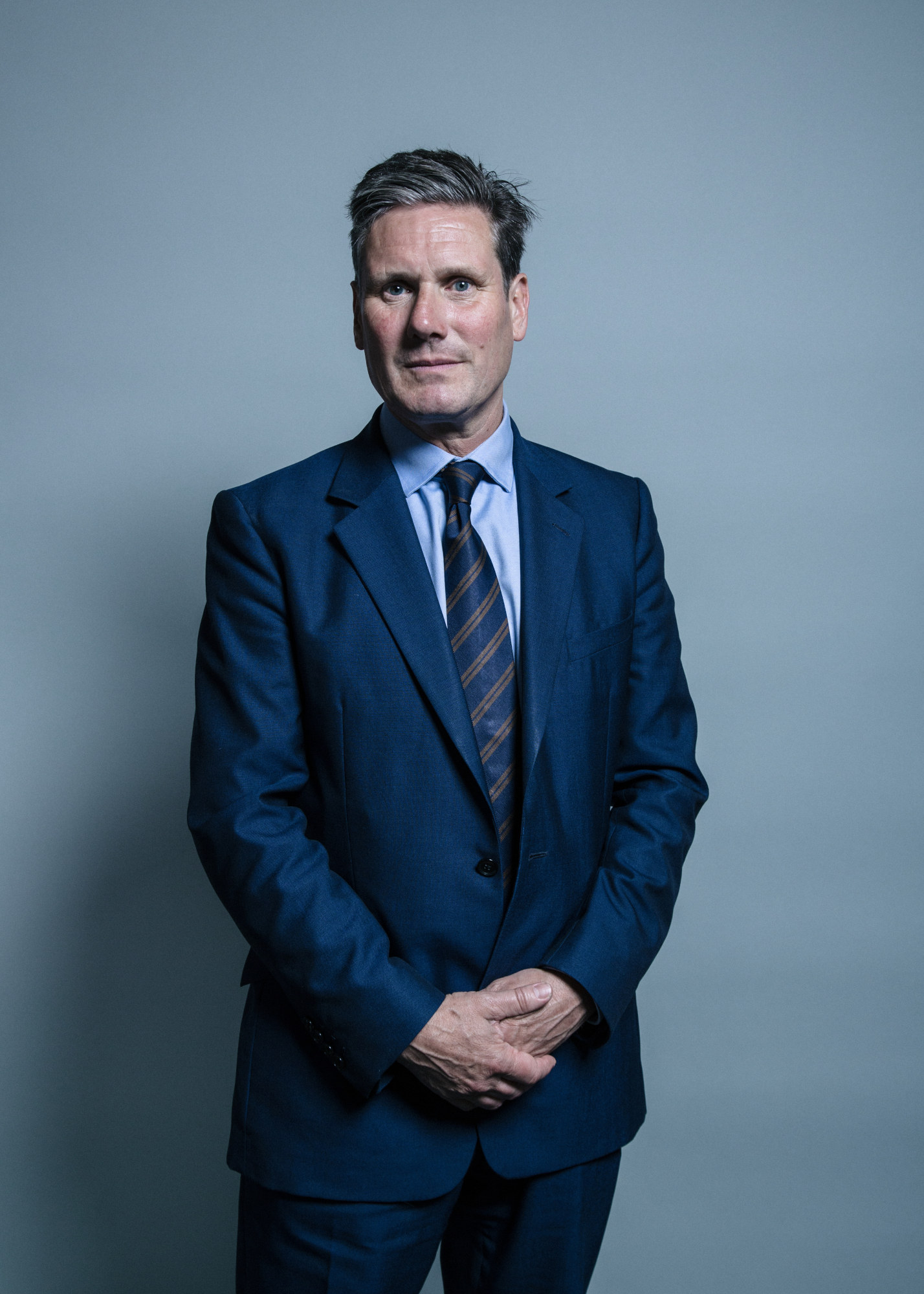
The Former Leader of the Labour Party, British Prime Minister Sir Keir Rodney Starmer and former Parliamentary Representative of the Greater London Parish of Holborn and St Pancras.
Keir Starmer’s tenure as British Prime Minster started with the election by a landslide majority in July 2024 immediately after the normalisation of the effects and global reaction to the Global COVID-19 pandemic, in which 70% of the global human population was suspected to have been immediately involved. In the United Kingdom and throughout the European area, a large scale political utility contingency was put into place with many governments having to take dire and abnormal policy decisions regarding the public welfare and unified public economy. In the United Kingdom specifically, the political landscape was fraught with public confusion about concepts of good governance and arguments made in public from the political classes, especially regarding issues of an economic type. The previous British Government, headed by the English Conservative Party, a nationalist movement very rarely known for its intelligence, had set about allowing its members to encourage the public to avoid their naturally existing collective responsibilities during the pandemic, which directly led to a Conservative defenestration.
The former British Prime Minister had a number of controversial opinions regarding successfully representing the public attitude to foreign affairs including within the ‘tradition’ of British/U.S. foreign policy, his premiership was especially marked by a high rate of foreign policy visits to foreign nations, including the Worlds primary superpower, the Peoples Republic of China. On the United States British public did not settle on any given issue due to the unusual public sentiment of the population of the United States, itself attempting to recover from COVID-19 in which it emerged with a death rate at 338 per 100,000 head of population, among the highest in the World.
Sir Keir Starmer also performed badly in the public sentiment regarding issues around Jewish nationalism and the so-called state of Israel, particularly the Jewish nationalist bombing and destruction of the City and provinces of Gaza by Jewish nationalist extremists, at a time when Mr. Starmer himself had placed so much of his attention toward overcoming the media-led public belief that the British Labour Party is an anti-Semitic organisation, the rump and corrupt -so-called Government of Israel set about another organised attempt at the widespread ethnic cleansing of the population of Gaza, assisted by American and other assorted nationalists, all underscored by a false narrative of loyalism and political favor that has only ever existed, in reality, as organised Governmental and Political Terrorism.
Sir Keir Starmer was the 100th officially recognised British Prime Minister to serve in the United Kingdom London Centre.
Wednesday, 30 September, 2026
We congratulate the President of France as he approaches his final year of office, and thank him for his service to his country and the European Union.
Wednesday, 30 September, 2026.
Speaking alongside Spanish Prime Minister Pedro Sanchez on Wednesday, French President Emmanuel Macron said that it would be "a good decision" if the UK decided to rejoin the European Union.
The two leaders met at the Moncloa Palace in Madrid on the second day of Macron's two-day state visit to Spain.
The comments came during a multilingual question and answer session in front of assembled media and press.
Courtesy France 24
Monday, 28 September, 2026
If there is to be peace in the cities, there must be peace between neighbors. If there is to be peace between neighbors, there must be peace in the home. If there is to be peace in the home, there must be peace in the heart.
Monday, 28 September, 2026.
We support, in the U.S., the principled polity of Socialism, above and beyond its present minimum arrangement, and expanded into a state and nation-wide polity to better represent the ordinary people of the United States, that being a nation that respects its neighbours, respects the International Community and only engages in hostile action when there is an overwhelming case for national self defence, and all other options are clearly and demonstrably exhausted. It is clear, that the current 'government' of the United States is a violent, racist and intractably corrupt organisation that is acting on behalf of its Nationalist ideology and not in concert with the best interests of the American people. Fundamentally, the U.S. Government is out of control and not properly stewarded or supervised, your President is not capable and likely will never be capable.
For most, inside and outside the United States, the concept of billionaires is a highly contentious subject matter but falls into a reasonably straightforward concept, all generated excess wealth in any society, in individualised terms, will harm and undermine the Government of that nation and there is no nation on Earth that can afford a dysfunctional Government in the event of an emergency, you have seen a low level emergency in the recent pandemic, that was a low mortality event, pandemics in general are higher mortality events. Pandemics are not the only emergency a nation may face, and history is littered with regimes, governments and orders that learned the hard way the necessity of safe and representational forms of public organisation. Billionaires are a luxury in any society, please do show me an example of a billionaire that does not live in luxury.
As for nationalists, and all the attendant problems and hard work they create for you, try not to be influenced by them, they have no land they can call their own, and the flags they insist on waving are equally contentious, in reality.
If you believe in hard work, a peaceful society, fair representation and a foreign policy that is not based on overt criminality, murder, corruption, hatred and racism, Socialism is the way for you, and others around the World will be glad of it.
The Peace combined with Socialism, is the greatest foreign policy there is.
If there is to be peace in the nations, there must be peace in the cities.
Monday, 28 September, 2026.
We see it as a primary duty,among other things, to publicise the thoughts, beliefs and opinions of the finest minds in the World on this subject. One must always differentiate between opinion and reaction of course, it is not our experience that the intelligent mind can so easily be classified as 'reactionary', mostly because the finer worldly mind is its own principle, and simply has no need of a reaction. For that reason you will not be surprised to learn that the finest minds in World politics are not generally American.
That is not to say of course that there are no fine minds in America, there are plenty, but plentiful aside, one must also consider the finer mind to be free of the existant constraints which exist within the American polity, society and parochial economia.
So we present here an analysis of America's current position in geopolitical terms, which we are sure is not just a prescient diatribe of blunt frankness, but also a congenial display of sharp critique from without, and within the wider and more powerful progressive International Polity.
Sunday, 27 September, 2026
If there is to be peace in the world, there must be peace in the nations.
Sunday, 27 September, 2026.
We have found the 2026 United Nations General Assembly meeting a little more palatable than is normally the case, many members use the UN forum to bring light to issues they face and that variously effects the International Community in part and in whole. There isn't any issue with this as it is what one expects of a World in motion so to speak. It is when the same issues crop up time and time again that this all becomes very tedious, and in the speeches you have seen and heard published here that one specific 'international' actor is routinely referenced as an offender.
The United States has killed/murdered or claims to have killed/murdered one of these heads of state, has caused the unlawful death of countless children in an educational establishment, has illegally kidnapped another head of state, has invaded another, has caused or encouraged the bombing of another, routinely spreads disinformation about another and generally gives a strong impression of being an outside actor with no international legitimacy, a pariah state that does not seem to feel it is subject to International law nor International norms as the rest of the World see's it. When the U.S. has been criticised for these offences, their political leaders have managed the people and their opinions for no other reason than excusing themselves from their own criminal behaviour, let no-one call that a democratic practice, it isn't.
Here at the Peace, we do not tolerate states that comport themselves in that way.
Your political system is garbage if you feel or have a system of Government that relies on the killing and murder of foreigners to appease your so-called 'electorate'.
But then again most of the U.S. electorate are too poor to care and haven't the savvy to understand what kind of a ride they are being taken for.
Saturday, 26 September, 2026
There Will be Peace.
Saturday, 26 September, 2026.
His Excellency Sergey Lavrov, Minister for Foreign Affairs of the Russian Federation, addresses the General Debate of the 81st Session of the General Assembly of the United Nations
Ignorance is a menace to peace.
Saturday, 26 September, 2026.
His Excellency Lamine Zeine Ali Mahaman, Prime Minister of the Republic of the Niger, addresses the General Debate of the 81st Session of the General Assembly of the United Nations
Poetry is an act of peace.
Saturday, 26 September, 2026.
His Excellency Abdelmadjid Abdelrahim Mahamat, Minister of Public Health and Prevention of Chad, addresses the General Debate of the 81st Session of the General Assembly of the United Nations
Peace begins with a smile.
Saturday, 26 September, 2026.
His Excellency Cardinal Pietro Parolin, Secretary of State of the Holy See, addresses the General Debate of the 81st Session of the General Assembly of the United Nations
Friday, 25 September, 2026
of evil-doers.
Friday, 25 September, 2026.
His Excellency Andrew Burnham, Prime Minister of the United Kingdom of Great Britain, addresses the General Debate of the 81st Session of the General Assembly of the United Nations
to 'rid the world'...
Friday, 25 September, 2026.
His Excellency Pedro Sánchez Pérez-Castejón, Prime Minister of the Government of Spain, addresses the General Debate of the 81st Session of the General Assembly of the United Nations
« previous entries - page 1 of 26


